
Deck guide for Chester County homeowners
How much does a new deck cost in Chester County, PA, and do you need a permit?

The Cost vs Value 2025 report puts the average composite deck addition in the Middle Atlantic region at $28,209 and a wood deck at $22,717, for its sample project. Your price depends on size, height, stairs, railing and decking. Most decks need a permit in Pennsylvania unless they're uncovered, 200 square feet or less, and no more than 30 inches above grade.
What does a composite or wood deck cost in Chester County?
The best public benchmark for our area is the Remodeling magazine Cost vs Value 2025 report for the Middle Atlantic region, which includes Pennsylvania. It prices a defined sample deck project and averages the cost across the region.
| Project (Cost vs Value 2025, Middle Atlantic) | Average job cost | Resale value | Cost recouped |
|---|---|---|---|
| Deck addition, composite | $28,209 | $27,587 | 97.8% |
| Deck addition, wood | $22,717 | $21,348 | 94.0% |
Those numbers are averages for the report's sample project, not Skyline prices. Your deck could land well under or over them. A 12 by 12 foot ground-level platform off a back door in Exton costs a fraction of a two-level deck with stairs down a slope in West Chester. What the report does tell you is that composite runs about $5,500 more than wood for the same sample deck, and buyers in our region pay back most of the cost at resale for both.
We don't give phone quotes for decks. We come out, measure, look at the grade and the house wall where the deck attaches, and write an estimate with the exact materials, timeline and scope. That written number is the one to plan around.
What drives the price of a deck
Two decks with the same square footage can be priced thousands of dollars apart. Here's where the money goes.
| Cost driver | Why it moves the price |
|---|---|
| Size | More square feet means more framing, decking and fasteners. |
| Height above grade and stairs | Taller posts, more bracing and long stair runs add lumber and labor. Height also decides the permit question. |
| Footings | Each footing is dug and poured below the frost depth your township requires. More posts means more footings. |
| Ledger attachment and flashing | The ledger board bolts to the house rim and gets flashed so water can't rot the house framing. |
| Framing | Joist size and spacing follow the span and the decking you choose. |
| Decking material | Pressure-treated wood costs less up front; composite such as Trex costs more and needs less upkeep. |
| Railing type | White vinyl, black aluminum, cable and glass are priced very differently per linear foot. |
| Covered roof or screen porch | A roof adds beams, posts sized for the load, shingles or metal, and flashing into the house. |
| Lighting | Post cap, stair riser and rail lights add parts and wiring. |
| Demolition of an old deck | Tearing out and hauling away an old deck is labor and dumpster cost. |
Height, stairs and footings
Height is the biggest hidden cost on hillside lots in Chester County. A deck off a walkout basement might sit 9 or 10 feet up on the low side, which means longer posts, bracing and a full stair run with landings. Every post sits on a concrete footing that has to go below the frost depth your township requires, so frost heave in January doesn't push the deck out of level. Your township code office sets that depth, and the inspector checks the holes before concrete goes in.
Ledger and flashing
The ledger is the board that attaches the deck to the house, and it's where old decks most often rot. If it isn't flashed, rain runs behind it and rots both the ledger and the house rim joist. A proper ledger gets bolted through to the house framing with flashing over the top. That flashing protects the wall of your house, and it's one place we never cut corners.
Decking and railing choices
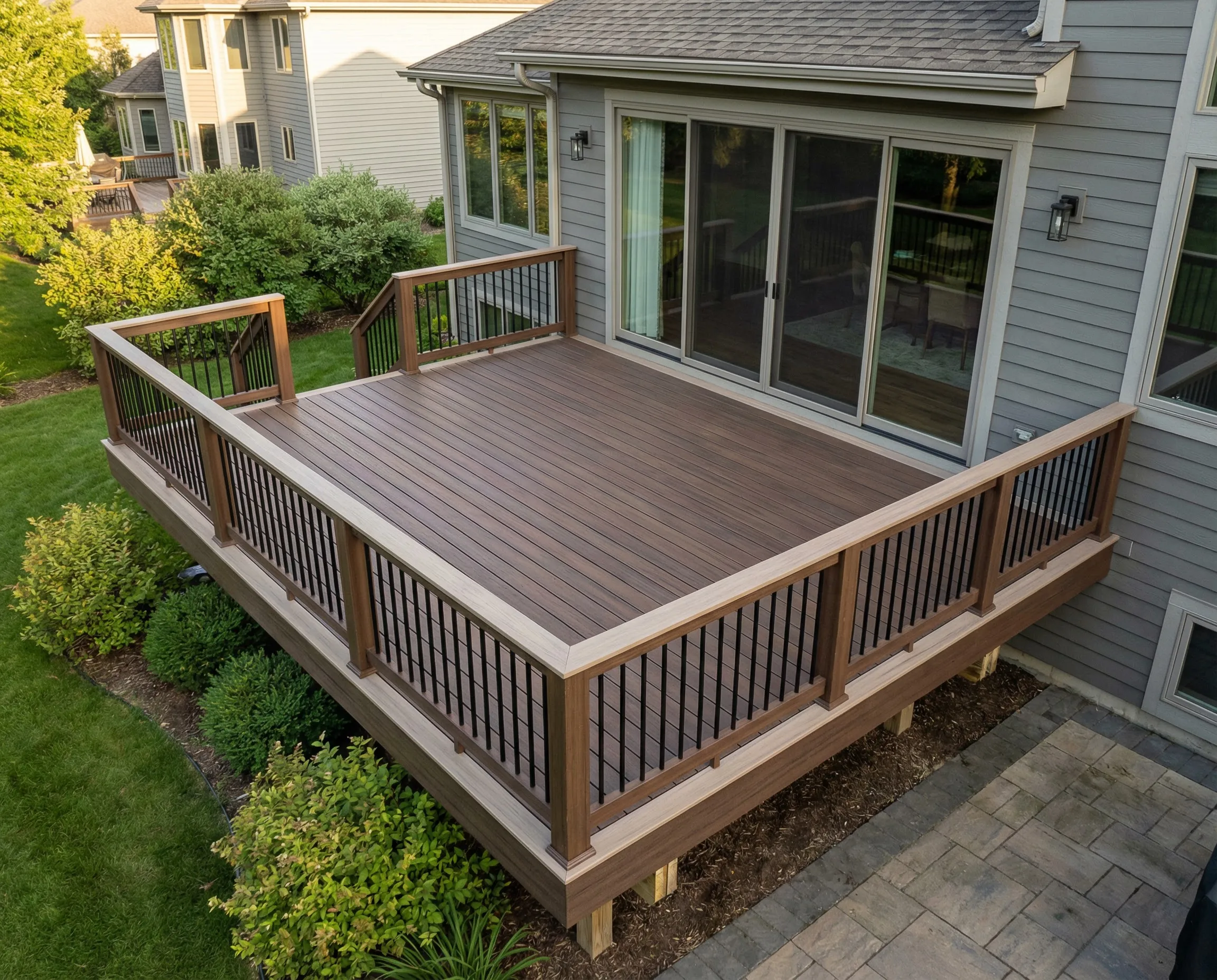
Decking and railing are where homeowners have the most say over the price. Pressure-treated pine is the lowest-cost deck surface. Composite boards like Trex cost more up front and skip the yearly staining. On railings, white vinyl is the common choice on colonials, black aluminum looks sharp against gray composite, and cable or glass keeps the view open over a backyard.
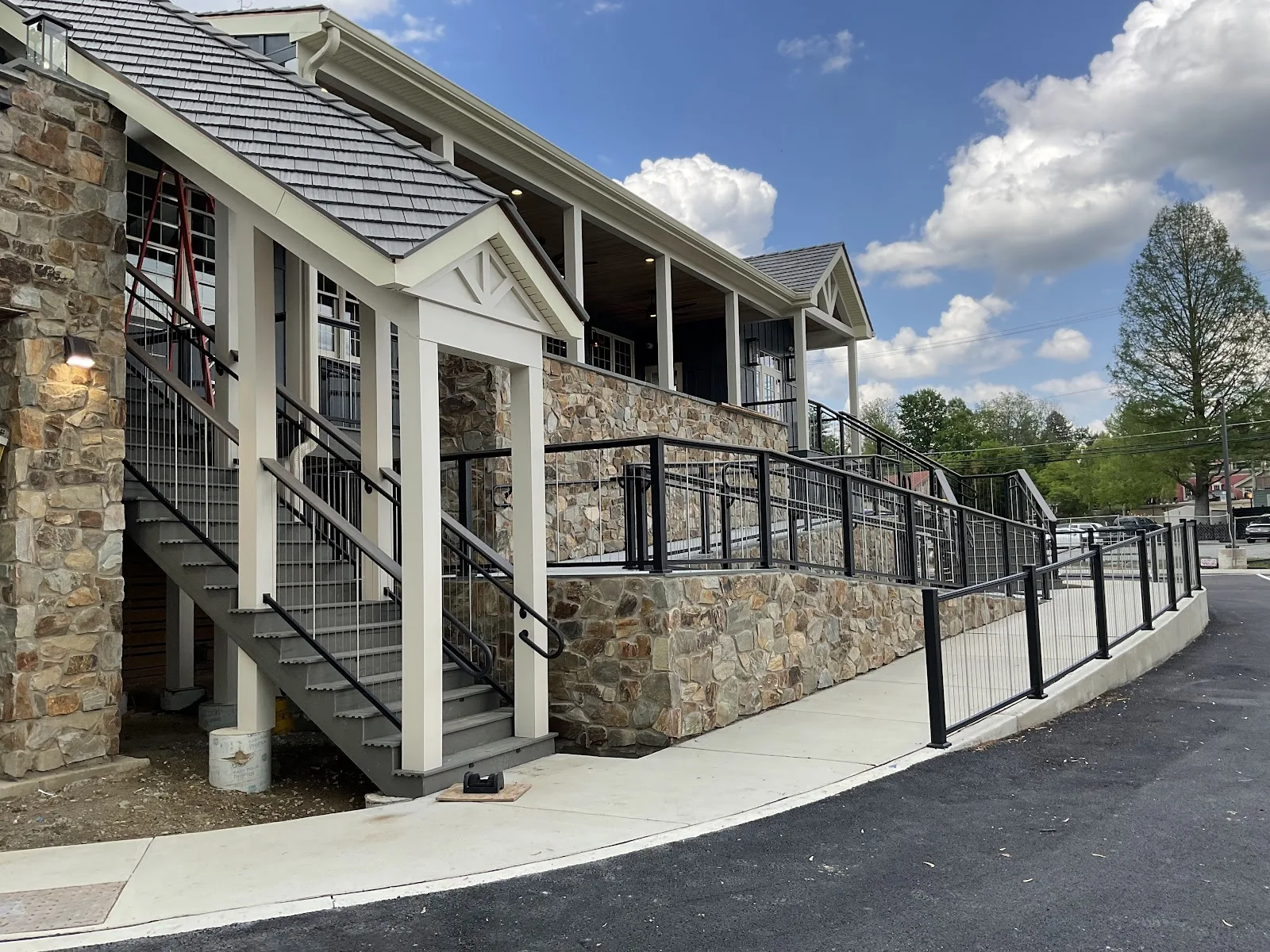
Cable railing costs more than white vinyl, and you pay for it in the view. Glass costs more again. If budget is tight, we often suggest composite decking with a simpler rail, then upgrading the rail on the section facing the yard.
Do you need a permit for a deck in Pennsylvania?
Usually, yes. Pennsylvania's Uniform Construction Code exempts some small decks, but most decks we build need a permit. The rule is Section 403.62(c)(8) of the PA UCC. Upper Macungie Township's Request for PA UCC Deck Building Permit Exemption summarizes it this way: a deck is exempt only if all of the conditions below apply.
| Exemption condition (all must be true) | Check your deck |
|---|---|
| The floor is not more than 30 inches above grade at any point, measured within 36 inches horizontally of the deck's perimeter | Measure from the deck surface down to the ground at the lowest spot near the edge |
| The deck is uncovered | No roof, pergola roof or screen porch above it |
| The deck is 200 square feet or less | A 10 by 20 foot deck is exactly 200 square feet; a 12 by 20 is 240 and needs a permit |
If even one condition fails, the deck needs a permit. A 16 by 28 foot deck is 448 square feet, so it needs one no matter how low it sits. Any covered deck needs one. And a small deck on a sloped yard can pass 30 inches at the low corner without anyone noticing.
Zoning is a separate question from the building permit. Setbacks from property lines, lot coverage limits and HOA rules can all affect where the deck goes and how big it can be. We check those during the walkthrough so the design doesn't have to change after the permit application goes in.
What inspections does a deck usually get?
Inspection schedules vary by township, so confirm yours with the code office. On most permitted decks we build, the inspections usually look like this:
- Footing inspection, after the holes are dug and before concrete is poured, so the inspector can check depth and size.
- Framing inspection, after the posts, beams, joists, ledger and hardware are in and before the decking covers them.
- Final inspection, when the decking, stairs and railings are done.
Each inspection is a stop point. The crew can't keep going until the inspector signs off, which is part of why a permitted deck takes longer on the calendar than the actual build days. Your permit card stays posted on site until the final is signed.
Planning a deck this year?
We'll measure your yard, check the grade and the house wall, and write a deck estimate with exact materials and timeline.
Request a written estimate Call 717-282-9023How long does a deck build take?
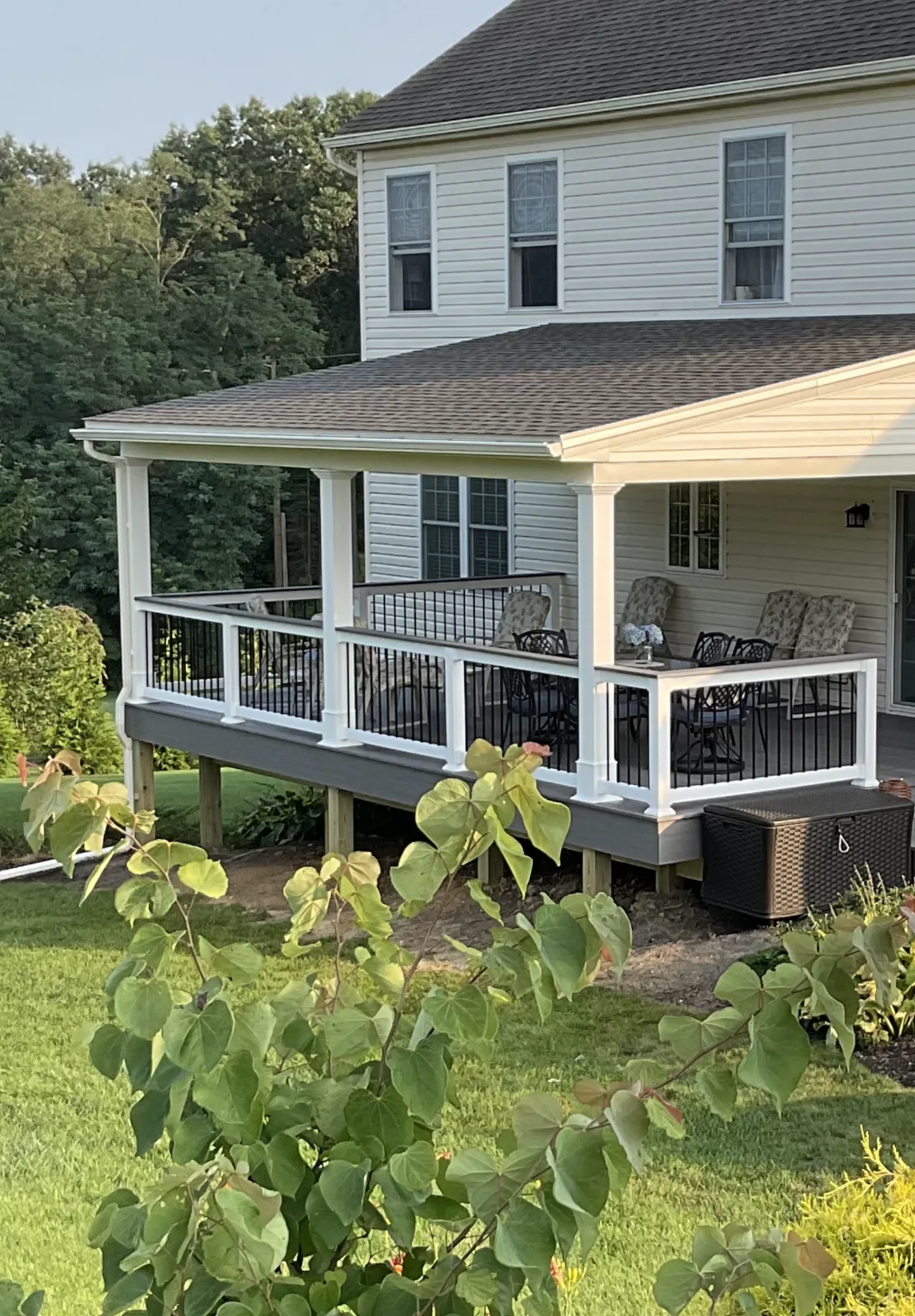
A straightforward deck goes up faster than most people expect. One of our customers, Emily T., had a 16 x 28 foot Trex deck built in 2.5 days. That was a single-level composite deck with standard framing.
Bigger, taller or covered decks take longer. Multi-level decks, long stair runs, curved edges and cable or glass railings all add build days. A covered deck adds the roof framing, roofing and flashing into the house wall. Then add the calendar time around the build: permit review, the wait between inspections, and rain days. The written estimate lists the timeline before we start.
Best time of year to build a deck in Southeastern PA
Spring and early summer are the busiest time for deck builders here, because everyone wants the deck by Memorial Day or the Fourth of July. That's also when permit offices get the most applications.
Fall is our favorite time to build. The ground is dry, the temperatures are good for working, and you can have the deck finished and the township final signed before the ground freezes. Footings need to be poured in unfrozen ground, which makes deep winter the hardest time to start a deck.
If you want a deck by June, start talking to contractors in the winter. That gives time for the design, the estimate and the permit, so the crew can start as soon as the ground allows.
Composite vs wood upkeep
The Cost vs Value gap between composite and wood is about $5,500 on the sample deck. Upkeep is where you get some of that back.
Wood deck upkeep
A pressure-treated wood deck needs a cleaning and a stain or sealer on a regular schedule, more often on decks in full sun. Between coats, boards can check, splinter and cup, and you'll be resetting popped nails or screws. If you skip the stain for a few years, the deck turns gray and the surface roughens. Wood is the right call if you like the look and don't mind a weekend of work every so often.
Composite deck upkeep
A composite deck like Trex needs soap and water a couple of times a year and a sweep of leaves so they don't sit and stain. No staining, no sealing, no sanding. Composite boards can get hot in direct July sun, and lighter colors stay cooler than dark ones. For most of our customers, skipping the stain every few years is the reason they pick composite.
Covered decks and screened porches
A roof over the deck lets you use it in July sun and summer rain. A screened porch adds bug-free evenings, which matters on wooded lots in Chester and Berks County.
Both are bigger projects than an open deck. The posts and beams have to carry the roof, the footings are sized for that load, and the roof ties into the house with flashing so water doesn't get into the wall. Under the PA UCC exemption above, any covered deck needs a permit, no matter how small or low it is.
Because we also install roofs and siding, one crew handles the deck, the roof over it and the siding where it meets the house. That's covered on our exterior remodeling page. If you're re-siding at the same time, our comparison of vinyl, composite and LP SmartSide siding helps you pick the wall material, and the siding replacement cost guide covers that budget. If the roof is due too, see our roof replacement cost guide for Chester County.
Your rights under the PA Home Improvement Consumer Protection Act
A deck is a home improvement project under Pennsylvania law, and the Home Improvement Consumer Protection Act protects you. Per the PA Office of Attorney General consumer brochure:
- Contractors who do $5,000 or more a year in home improvement must register with the Attorney General and show the registration number on contracts, estimates and ads.
- Work over $500 requires a written contract.
- You can cancel within 3 business days of signing.
- No payment is due before the contract is signed.
You can verify a contractor's registration at attorneygeneral.gov or by calling 1-888-520-6680. Do that before you sign with anyone, including us.
Frequently asked questions
How much does a composite deck cost in Chester County?
The Cost vs Value 2025 report lists a composite deck addition in the Middle Atlantic region at an average of $28,209, with 97.8% recouped at resale. That's for the report's sample project, not a Skyline price. Your deck's cost depends on size, height, stairs, railing and whether it has a roof.
Is a wood deck cheaper than composite?
Up front, yes. Cost vs Value 2025 lists the Middle Atlantic wood deck sample at $22,717, about $5,500 less than composite. Wood needs cleaning and staining or sealing on a regular schedule, while composite like Trex needs soap and water. Over the years, the upkeep narrows the gap.
What size deck can I build without a permit in PA?
Under PA UCC Section 403.62(c)(8), a deck can be exempt only if it's 200 square feet or less, uncovered, and no more than 30 inches above grade at any point within 36 inches of its perimeter. All three must be true. Your township's code office makes the final call.
How deep do deck footings have to be in Chester County?
Footings must go below the frost depth your township requires, so frost doesn't heave the posts in winter. The required depth comes from your municipality, and the inspector checks it at the footing inspection before concrete is poured. We confirm the number with the township on every deck.
How long does it take to build a deck?
A simple deck can go up in a few days. One of our customers had a 16 x 28 foot Trex deck built in 2.5 days. Multi-level, tall or covered decks take longer, and permit review, inspection waits and rain days add calendar time around the build.
Does a covered deck need a permit?
Yes. The PA UCC deck exemption only applies to uncovered decks, so a deck with a roof or a screened porch needs a permit no matter its size or height. The roof also adds framing, roofing and flashing work, which adds to the price and the build time.
Who pulls the deck permit, me or the contractor?
On the decks we build, Skyline works with the township on the permit application and schedules the inspections. Some townships require the homeowner's signature on the application. Ask any deck contractor who handles the permit before you sign, and get it in the written contract.
Get a deck estimate in Chester County
We build composite and wood decks, covered decks and screened porches across Chester County and the rest of Southeastern PA. See our deck installation service, finished work in the project gallery, or a recent build in our custom deck installation post for Montgomery County. Our crew tarps your landscaping, runs a rolling magnet for nails, and walks the finished deck with you.
Book a deck walkthrough
Ben will measure the yard, check the grade and write an estimate with exact materials, timeline and scope.
Request a written estimate Call 717-282-9023Skyline Exteriors LLC, 1475 Telegraph Road, Honey Brook, PA 19344. Phone 717-282-9023. Open Monday to Sunday, 9:00 AM to 5:00 PM.
Sources: Remodeling magazine / JLC, Cost vs Value 2025, Middle Atlantic; Upper Macungie Township, PA UCC Deck Building Permit Exemption request; PA Office of Attorney General, Home Improvement Consumer Protection Act brochure.
